
News from April
Howdy, y’all! It’s movie month at Oilfield Witness. We are incredibly grateful to all of the film makers who have chosen to highlight Sharon and Charlie and our work at Oilfield Witness. At the same time there was more fieldwork this month and more video stories in the works. Sharon and Charlie both worked with more video journalists in the field in April.
This Is Not A Drill
Sharon was in New York City for two screenings of This Is Not A Drill where she was on a panel with director Oren Jacoby and film co-stars Roishetta Ozane and Justin J. Pearson. Patagonia has released the film on its Youtube channel. View at your leisure.
Gaslit
Sharon was on podcasts promoting Gaslit and was on panel discussions after the screenings at the Dallas International Film Festival. Gaslit continues to be shown at festivals.
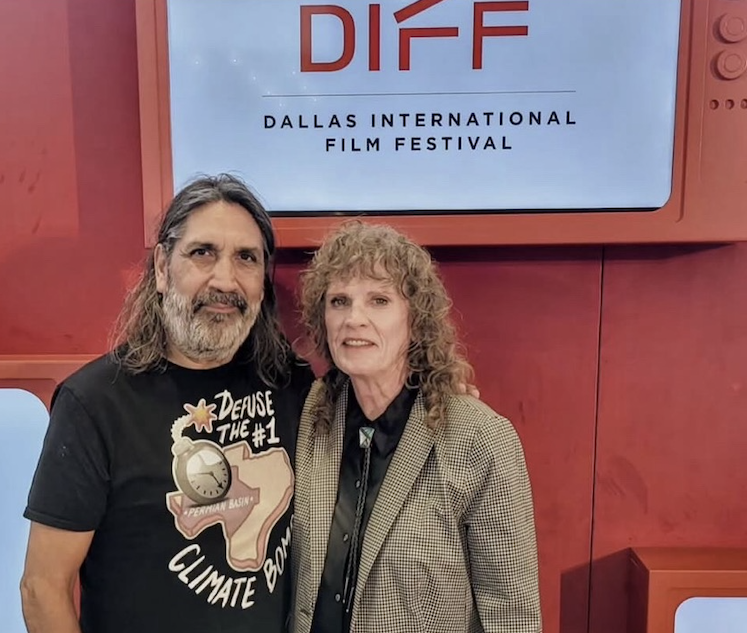
Ramon and Sharon at Dallas Film Festival screening of Gaslit
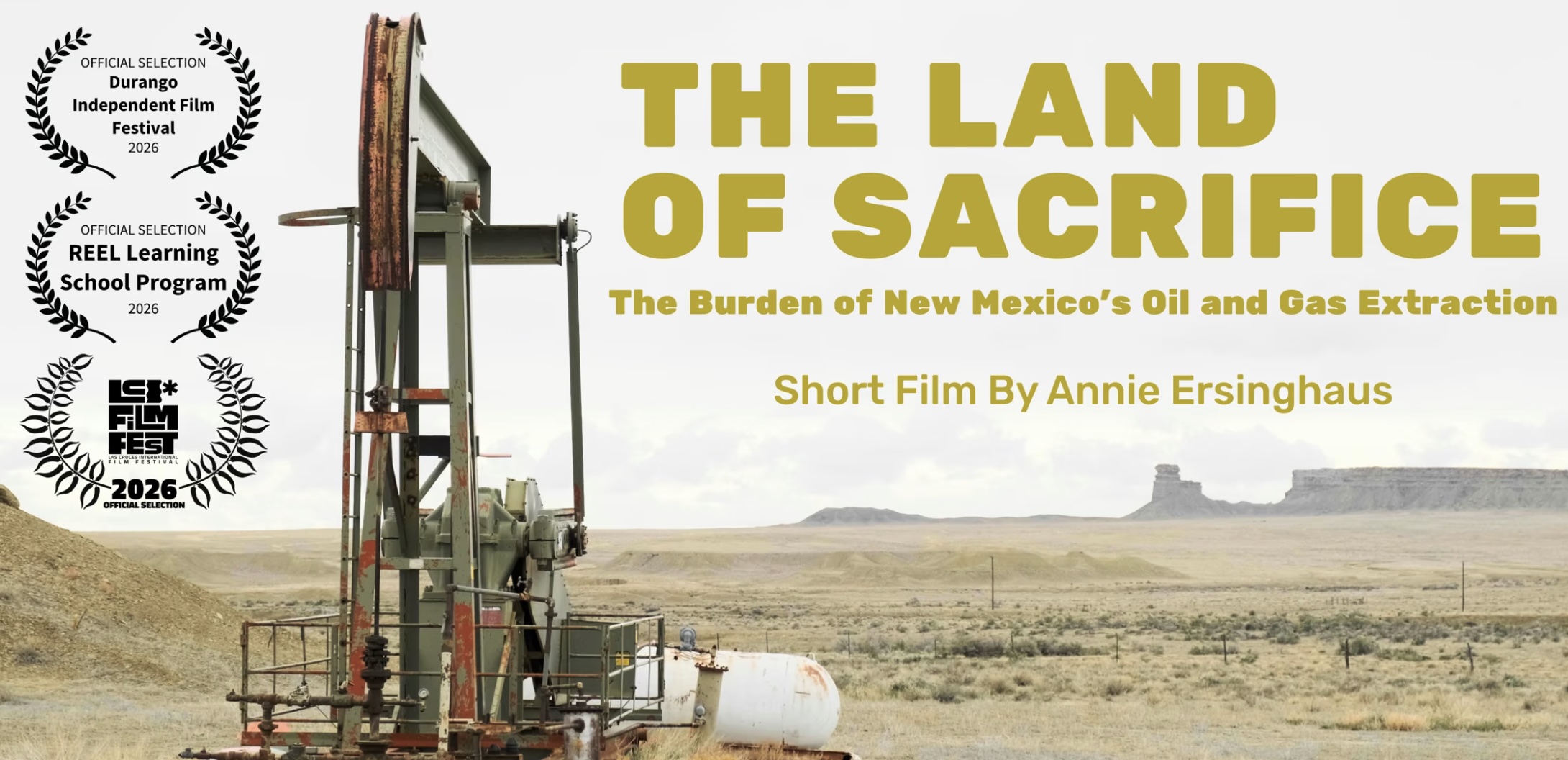
Land of Sacrifice
Charlie attended screenings of Land of Sacrifice in Albuquerque and Santa Fe where he participated in panel discussions with the film’s director Annie Ersinghaus, Gail Evans and Lavran Johnson from Center for Biological Diversity, ecologist Roman Dial from Alaska Pacific University and University of New Mexico PhD candidate Mario Attencio.
Media News
Our team worked with a group of journalists from the EU and the U.S. to provide research, field tours and OGI video for this article on the reality of natural gas (methane) production that is supposedly “certified” to be low emissions. The article was published in The Guardian with longer versions at Drilled Media and Gas Outlook.
In July 2025 the energy publication Gas Outlook travelled with Oilfield Witness, an environmental monitoring group, to 10 MiQ-certified sites across the Permian Basin, the country’s largest oil and gas field, which straddles the Texas-New Mexico border.
Using optical gas imaging cameras that detect methane invisible to the naked eye, they documented what Tim Doty, a former air quality inspector at the Texas Commission on Environmental Quality who reviewed the footage, described as “huge emissions” at multiple sites.
At BP’s State Ella Mae Hall gas well, images showed an unlit flare that appeared to be malfunctioning, “acting as a vent pipe rather than a combustion device”, Doty said.
Justin was quoted in an article about the impacts of LNG terminals on the local population in Malaysia.
Mikulka said, “The decisions that Malaysia has made to invest billions in LNG is a big mistake, not only in terms of the environment and health, but also from an economic perspective.”
Tim’s work in Canada with our camera got more coverage in the CBC.
Tim Doty, a retired environmental inspector for the Texas Commission on Environmental Quality, says the AER’s response to Patry’s concerns is “not acceptable.”
Doty, who now works as an independent consultant, was recently commissioned by three environmental groups to conduct environmental assessments near industrial infrastructure in Canada in 2022 and 2025.
One of his last stops was Patry’s farm.
He inspected the wells using an optical gas imaging camera, which uses infrared light to show gas emissions that can’t be seen with the human eye.
“They just were continuously venting the whole time we were there,” he said, adding this was common at sites he visited in other provinces.
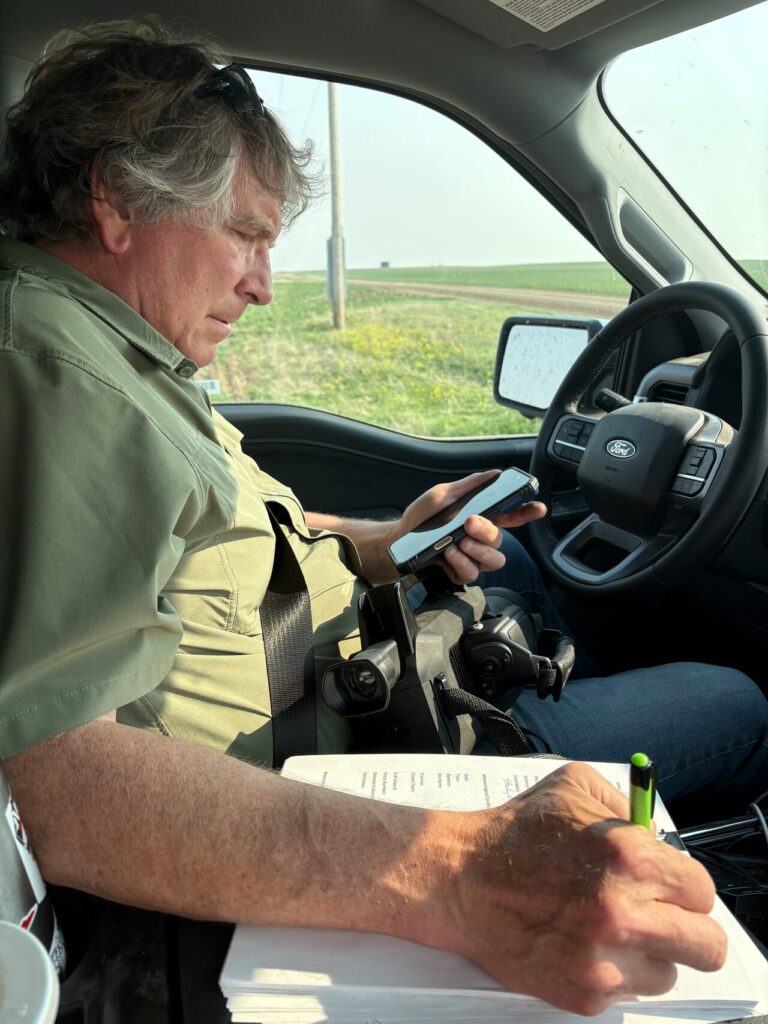
Image: Tim in the field in Canada
Fieldwork
Charlie joined a field tour for New Mexican politicians that was organized by Elected Officials to Protect America.Charlie wrote about the trip here where you can get more details. Justin also presented to the group remotely about the financial realities of the huge unfunded oil field liabilities facing the state of New Mexico. From Charlie’s overview:
Oilfield Witness recently hosted New Mexico lawmakers for a field tour through the Permian Basin, giving them a hands-on look at how oil and gas touches everyday life in our communities. The trip wove through Carlsbad to Artesia to Loco Hills, stopping at frontline communities and sites tucked into residential areas, as well as on Bureau of Land Management and State lands. We also visited spill sites, produced water facilities, and a refinery, to show the full arc of energy production in the region.
A clear message from the day: enforcement capacity changes everything. Rules on paper are only as strong as the agencies available to police them, inspect, and impose consequences. At several stops, lawmakers saw that even well-written standards for water management, spill response, and land protection can fail to protect health and landscapes when inspectors are few, budgets are tight, or authorities lack clear remedies for noncompliance.
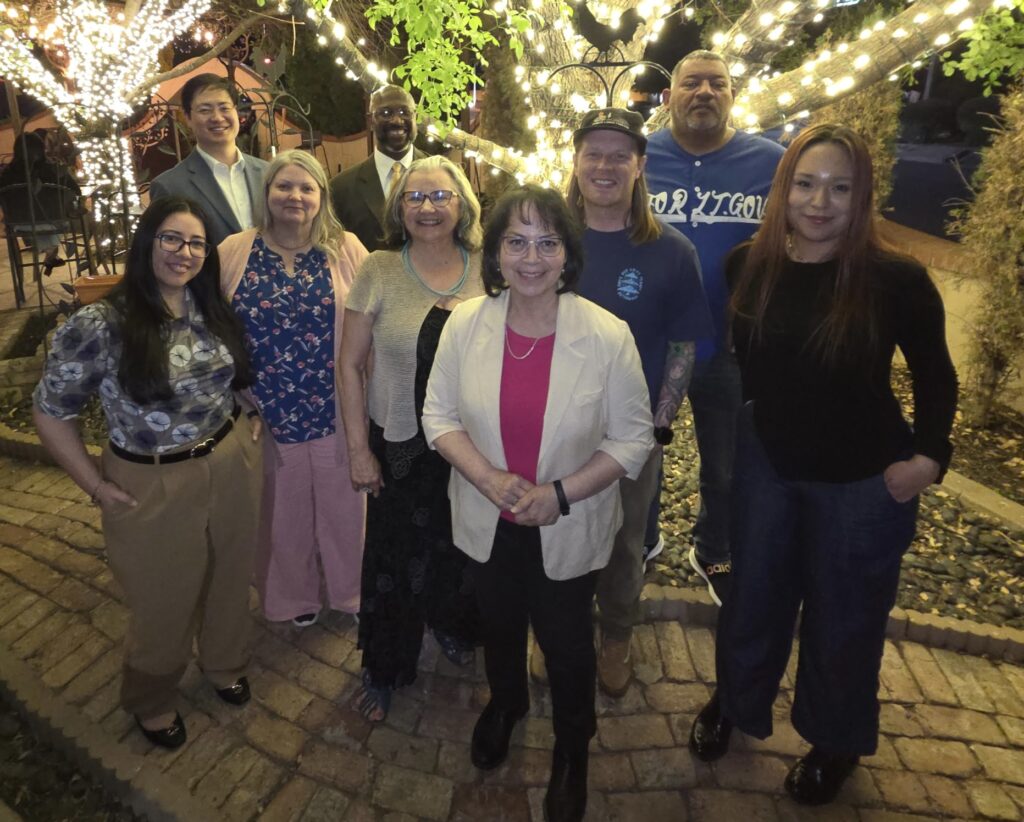
Senator Pope, candidate for LT. Governor. Senator Sedilo Lopez. Rep Debra Sarinana. Oil Conservation Director Albert Chang, Albuquerque Councilwoman Tammy Fiebelkorn, and staff from Oilfield Witness and Elected Officials to Protect America.
Charlie also took a TV news crew out for a field tour in New Mexico at the end of April. We will share the reporting when it is published.
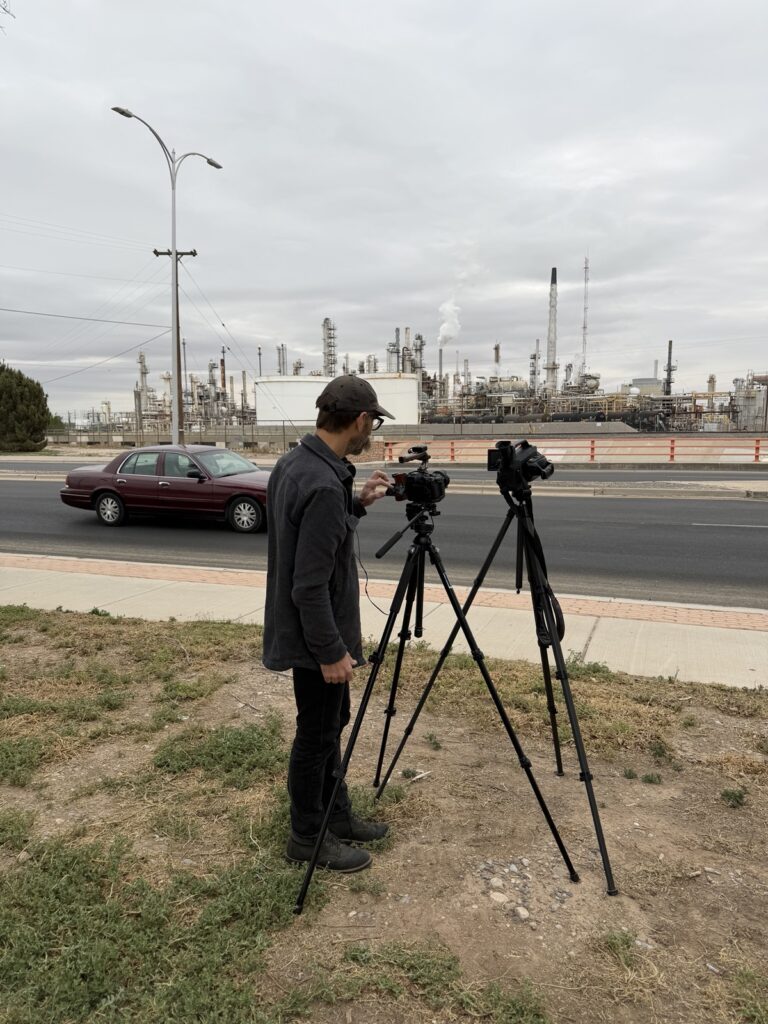
Sharon also spent time in the Permian with a video news team reporting on the economics of flaring and venting methane gas.
Our Writing
Justin’s analysis of the economic challenges for the global LNG market was featured in Global Energy Monitor’s Inside Gas Newsletter.
“Geopolitical headwinds combined with basic economics are putting the squeeze on LNG, as even the sector’s cheerleaders are having to acknowledge, writes Justin Mikulka in Powering the Planet.”
Jack wrote about the odd developments with the EU methane regulations and how the outlook for real regulations to limit methane is not good.
“The oil and gas industry and some major environmental NGOs are fighting. That should not surprise anyone, but this fight has put both groups in strange positions. Traditionally the battle between these groups looks like this: the industry claims it is clean or getting cleaner while the environmental movement polices those claims and notes the often underreported environmental impacts of fossil fuels. However, due to a strange confluence of factors, this month, the environmental organizations are arguing that the industry is getting cleaner while the industry is arguing that it is irreparably dirty.”
– Till the end of oil
The Oilfield Witness Team